The Economics of Music Streaming in India

When people argue about music streaming in India, they usually argue emotionally.
Artists say payouts are unfair.
Users say subscriptions are too expensive.
Platforms say margins are thin.
I wanted to step outside that loop.
So instead of opinions, I went to the documents, annual reports, filings, industry PDFs, and long-term data to answer one simple question:
How does money actually move through India’s music streaming ecosystem?
What I found isn’t broken.
It’s structural.
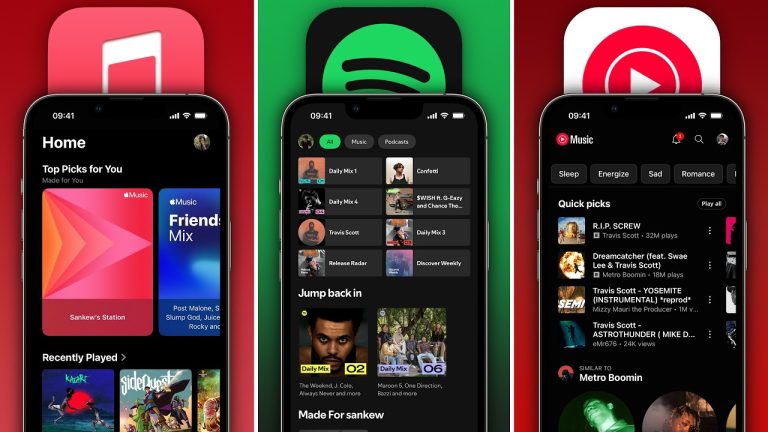
And once you understand that structure, the behavior of Spotify, YouTube Music, JioSaavn, Apple Music, and Amazon Music stops looking confusing and starts looking inevitable.
The Size of India’s Music Economy (Before Streaming Takes Its Cut)
Everything starts with scale.
According to the IFPI Global Music Report 2019, India’s recorded music revenue in 2018 stood at approximately USD $156 million.
Despite having one of the largest populations on earth, India ranked outside the global top 15 music markets at the time.
Fast forward five years.
By 2023, India’s recorded music revenues had crossed USD $385 million, making it one of the fastest-growing music markets globally.
That’s a 2.4× increase in half a decade.
Now compare that revenue growth with usage.
India’s Consumption vs Monetization Reality
| Metric | Estimate |
| Internet users | ~600 million |
| Smartphone users | ~750 million |
| Paid music subscribers | ~7–10 million |
| Paid penetration rate | ~1.2–1.6% |
This gap, massive consumption with minimal monetization, defines every economic constraint that follows.
India is not a small market.
It is a low-yield, high-volume market.
Who Actually Owns the Music Indians Stream
Most streaming discussions collapse here because they start from the wrong assumption.
Streaming platforms do not negotiate with millions of individual artists.
They negotiate with a handful of rights holders.
Based on label annual reports, investor presentations, and industry disclosures, India’s streaming catalog ownership looks roughly like this:
| Rights Holder | Estimated Share of Streams |
|---|---|
| T-Series | ~35–40% |
| Zee Music Company | ~15–18% |
| Sony Music India | ~12–15% |
| Saregama India | ~10–12% |
| Others & Indies | ~15–20% |
In practical terms, five entities control the majority of commercially relevant music in India.
This concentration shapes:
- Licensing leverage
- Pricing flexibility
- Risk allocation
Platforms don’t dictate terms here.
They absorb them.
Licensing in India Is Not Revenue Share — It’s Risk Transfer
A common misconception is that streaming platforms simply pay labels a percentage of revenue.
That view is incomplete.
In India, licensing agreements often include Minimum Guarantees (MGs) — fixed upfront commitments that platforms must pay regardless of how much revenue they generate from users.
According to disclosures referenced in Spotify Form F-20 filings and label earnings calls:
- Minimum guarantees intensified between 2020 and 2022.
- Platforms committed capital before monetization fully matured.
- Demand risk shifted from labels to platforms.
In simple terms:
- Platforms pay first.
- Monetization comes later, if it comes.
This explains why streaming companies in India can show:
- Exploding user growth
- Increasing listening hours
- Yet persistent operating losses
It is not inefficiency.
It is contractual structure.
Why India’s “Per-Stream Payout” Looks So Low
This is the most misunderstood metric in global streaming debates.
People quote Western averages — $0.003 to $0.005 per stream — and expect India to match them.
That expectation ignores basic math.
The Revenue Inputs
According to GroupM’s “This Year Next Year – India” report:
- Audio ad CPMs in India are 60–70% lower than the US
- Brand demand for audio ads is still developing
Subscription pricing:
- Typical Indian premium plans: ₹99–₹129/month
- Roughly $1.20–$1.50, among the cheapest globally¹⁰
Lower ARPU + lower ad CPMs = lower per-stream outcomes.
This isn’t exploitation.
It’s arithmetic.
Platform Economics vs Artist Economics (An Important Distinction)
This is where most conversations collapse.
Platforms and artists do not sit in the same economic layer.
Platforms pay rights holders.
Rights holders decide artist splits.
Based on IFPI artist revenue breakdowns and Indian label disclosures:
- Artists typically receive 8–15% of label net receipts
- Only after advances and marketing costs are recouped
So when someone says:
“Spotify doesn’t pay artists fairly”
What they’re often reacting to is label contract structure, not platform behavior.
That distinction matters, economically and legally.
Ads vs Subscriptions: Why India Can’t Skip the Ad Phase
Many Western markets transitioned quickly from free to paid.
India did not — and structurally could not.
By 2025 estimates:
- 80–85% of Indian streaming users remain on free tiers
- 15–20% are premium subscribers
Why this works:
- India is ad-tolerant
- Users are price-sensitive
- Bundling dominates willingness to pay
This is why platforms optimize for:
- Listening hours
- Retention
- Habit formation
Revenue follows attention, not the other way around.
Counterfactual: What If India Had Western Pricing?
Let’s test a popular argument. What if India charged ₹999/month for music streaming, similar to Western markets?
Assumptions:
- 90% subscriber churn (a conservative estimate)
- Paid subscriber base falls to around 1–2 million
- ARPU rises, but total revenue shrinks
Potential consequences:
- Higher per-user revenue, but lower total ecosystem payout
- Increased piracy as users seek cheaper alternatives
- Lower discovery reach for new or niche artists
Pricing India like the West would likely reduce, not increase, overall artist earnings. This is why streaming platforms resist high pricing experiments in India (Spotify India pricing page, Apple Music India pricing).
Why Platform Strategy Makes Sense Once You See the Data
When ownership concentration, licensing risk, ARPU, and ad economics are viewed together, platform behavior becomes predictable.
This explains why:
- Pricing experiments keep happening (Spotify India pricing page)
- Mini plans exist to capture low-tier subscribers (Times of India coverage on Spotify pricing)
- Free tiers are protected to retain scale (PwC India Entertainment & Media Outlook 2024–28)
- India is treated as a long-term growth bet (Economic Times article on Spotify India strategy)
Spotify leadership has confirmed this approach explicitly:
- Daniel Ek emphasized India’s cultural scale at launch (Spotify Newsroom announcement)
- Amarjit Batra reinforced that growth precedes monetization in India (LiveMint interview)
The data backs every strategic decision these platforms make, showing that what looks experimental is actually carefully calculated based on the economics of the Indian market.
What the Economics Actually Prove
Let’s strip this down.
- India is a scale market, not a margin market
- Licensing risk sits primarily with platforms, not labels
- Per-stream payouts reflect revenue reality, not platform intent
- Artist earnings depend more on contracts than apps
- Ads are a bridge, not a failure
India’s streaming economy is not underpaying by design.
It is under-monetized by necessity.
Why India Still Matters Globally
India may not generate the highest revenue today, but it trains:
- Recommendation algorithms
- Multilingual discovery systems
- Regional engagement models
What works in India increasingly works everywhere else.
From an economic perspective, India isn’t just a market.
It’s an infrastructure lab for global streaming.
That’s why platforms are willing to wait.
Final Thought
If you’re looking at music streaming in India and only asking:
“Why doesn’t it pay more?”
You’re asking the wrong question.
The real question is:
How long does it take to monetize half a billion listeners without breaking the ecosystem?
That’s the experiment India is running right now.
And its outcome will shape streaming economics everywhere.